
Interior Designer Website Examples That Attract High-End Clients
Why Your Interior Design Website Matters More Than You Think
For interior designers, a website is more than a marketing tool.
It’s an extension of your aesthetic.
Before a client ever reaches out, they’re already forming impressions based on your online presence.
They’re asking themselves:
• Does this designer understand my taste?
• Does their work feel refined and professional?
• Do they feel established and trustworthy?
High-end clients in particular are incredibly sensitive to visual cues.
They notice typography, spacing, photography, and the way projects are presented.
A thoughtfully designed website communicates professionalism, confidence, and creative clarity — long before a consultation begins.
Below are several styles of interior designer websites that consistently attract high-end clients.
1. The Editorial Portfolio Website
Many of the most successful interior designers structure their websites like a magazine editorial layout.
Instead of crowding pages with text, these websites allow projects to breathe.
Features of this style include:
• large photography
• simple typography
• generous white space
• carefully curated project pages
The result feels calm, refined, and intentional.
Visitors feel like they’re browsing a design publication rather than a sales page.
2. The Minimalist Design Studio Website
Minimalism works beautifully for interior designers.
A restrained website allows the work itself to stand out.
These sites typically include:
• neutral color palettes
• elegant typography
• very simple navigation
• photography-forward layouts
This approach signals confidence.
It tells visitors the designer trusts the work to speak for itself.
3. The Narrative Portfolio Website
Some designers choose to incorporate storytelling into their websites.
Instead of simply presenting images, they include short descriptions that explain:
• the inspiration behind a project
• the architectural context
• the client’s goals
• materials and design choices
This narrative approach helps potential clients better understand the designer’s thinking and creative process.
4. The Lifestyle Brand Website
Many interior designers today are building broader lifestyle brands.
Their websites may include:
• design philosophy
• product recommendations
• blog content
• travel or inspiration journals
These sites feel immersive and help clients understand the designer’s taste beyond individual projects.
5. The Luxury Portfolio Website
High-end interior design websites often emphasize refinement and restraint.
These websites feature:
• extremely high-quality photography
• elegant layouts
• limited text
• carefully curated projects
The overall tone feels sophisticated and confident.
This type of website attracts clients who are looking for a premium design experience.
Elements That Attract High-End Interior Design Clients
While design styles vary, successful interior design websites often share a few common characteristics.
These elements help communicate professionalism and creative authority.
1. Exceptional Photography
Interior design is inherently visual.
The quality of your photography plays a major role in how visitors perceive your work.
Professional photography allows potential clients to experience your projects the way they were meant to be seen.
2. A Clear Design Identity
High-end clients are drawn to designers who have a clear point of view.
Your website should reflect a recognizable aesthetic.
Consistency across typography, colors, and imagery helps communicate that identity.
3. Thoughtful Project Presentation
Instead of uploading dozens of random images, successful designers curate each project carefully.
Each project page might include:
• a small selection of strong photographs
• thoughtful sequencing of images
• a short description of the project
This approach makes the work feel intentional and elevated.
4. Simplicity and Focus
Overly complicated websites can distract from the work itself.
Most successful designer websites maintain a simple structure with only a few key pages:
• Home
• Portfolio
• About
• Press or Features
• Contact
When the structure is clear, visitors stay focused on the work.
5. A Strong About Page
Interior design is a personal profession.
Clients want to know who they are working with.
An effective About page might include:
• a portrait of the designer
• a short design philosophy
• professional background
• notable projects or press
This helps potential clients feel connected before they even schedule a consultation.
How Interior Designers Can Improve Their Websites
If you’re an interior designer who feels that your website doesn’t fully reflect your work, you’re not alone.
Many designers struggle with the technical side of building a website that feels as refined as their design projects.
Fortunately, the most impactful improvements are often quite simple.
Focus on:
• clear portfolio presentation
• strong photography
• simple navigation
• refined typography
• thoughtful spacing and layout
When these elements come together, the website begins to feel like an extension of your design practice.
If you're currently refining your site, you may also find these guides helpful:
• How to Build an Interior Designer Website That Attracts Clients
• The 7 Pages Every Interior Designer Website Needs
Both explore the structure behind successful interior design websites.
Interior Designer Website Template
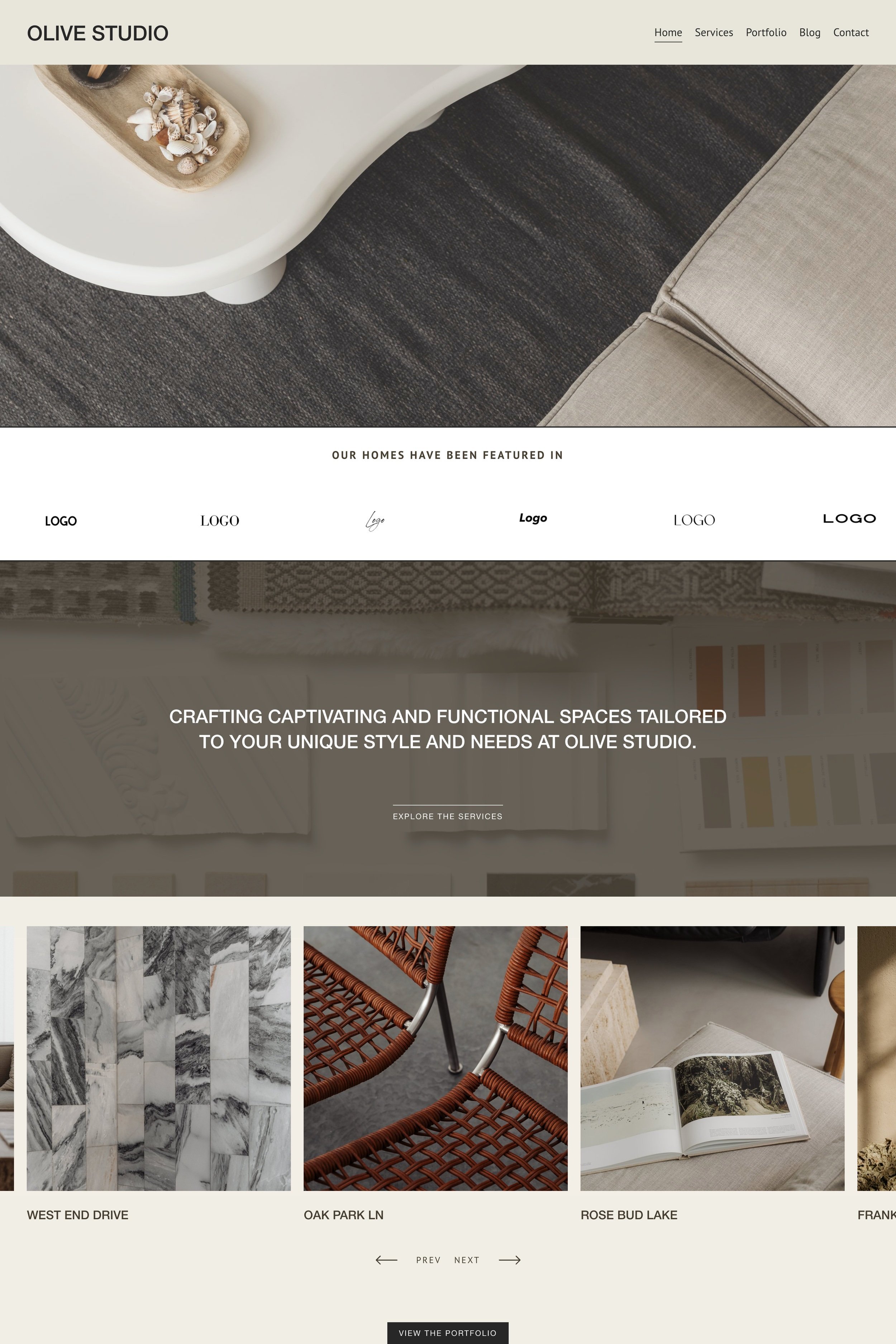
If you're an interior designer who wants a polished website without spending months designing one, I created a customizable Squarespace website template specifically designed for interior designers.
This template includes:
• a refined homepage layout
• portfolio project pages
• an elegant About page
• service descriptions
• inquiry forms
• mobile-friendly design
It provides a clean, sophisticated structure so your portfolio and aesthetic can take center stage.
Final Thoughts
Your website is one of the most important tools for communicating your aesthetic as an interior designer.
Long before a potential client reaches out, your website is shaping their perception of your work, your professionalism, and your design philosophy.
When your website reflects the same level of care and intention as your interiors, it becomes a powerful part of your brand.
With thoughtful structure, beautiful photography, and a refined layout, your website can quietly attract the type of clients you want to work with.
And sometimes the easiest way to achieve that is by starting with a foundation already designed specifically for interior designers.

